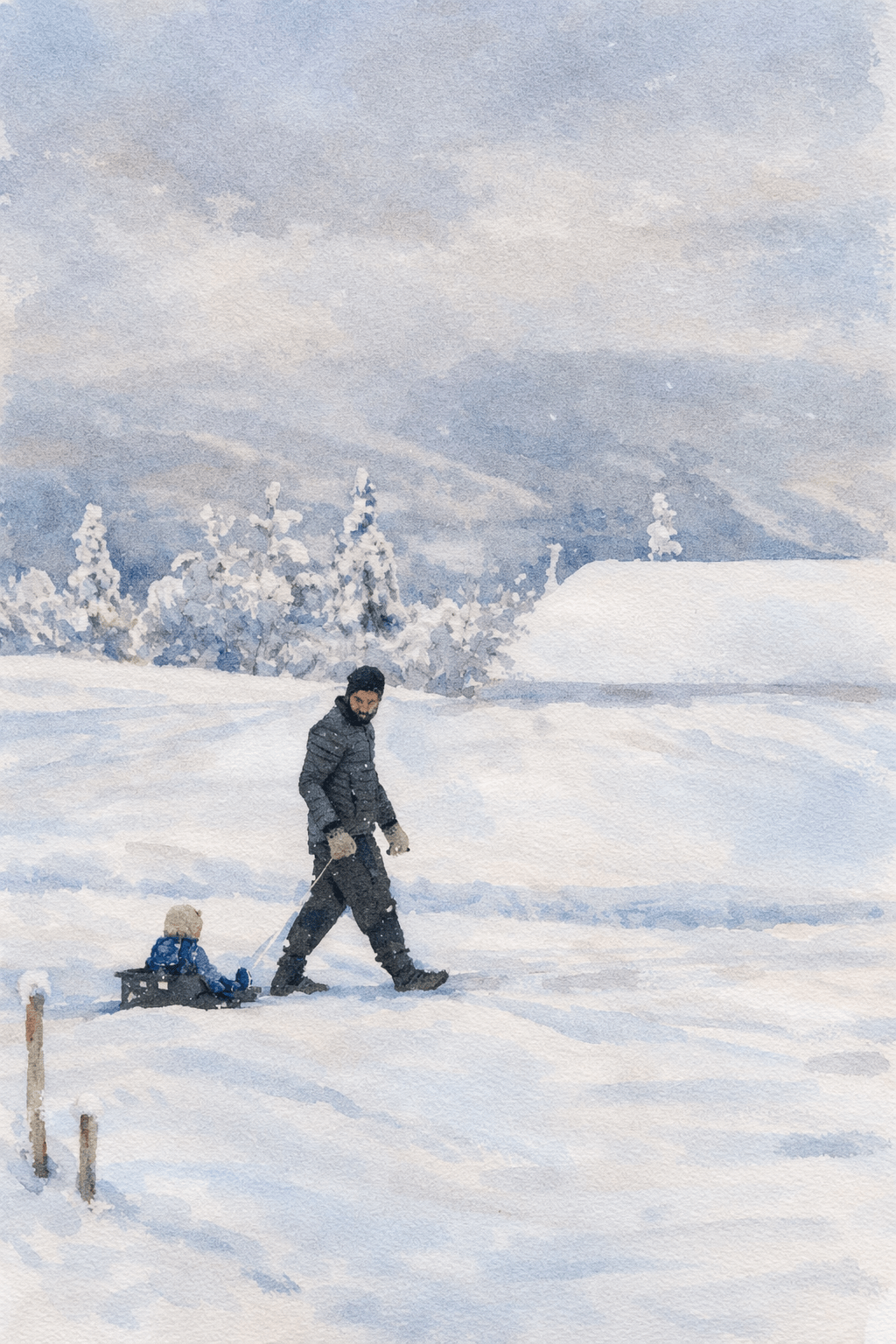
I recently spent a few days in a cabin with friends I’ve known for a long time. It was warm, familiar, and filled with the kind of comfort that only shared history brings. What I didn’t expect was that it would also make me notice things, small, quiet things about friendship, responsibility, and how differently we move through life now.
Every long-term friend group eventually splits into different life lanes. Mine certainly has. Some of us have kids, some don’t, and some are still negotiating with life about what comes next. No path is better than another, but they do come with very different rhythms, and you start to notice that when you’re all in the same room.
When children enter the picture, they don’t arrive alone. They bring earlier mornings, louder moments, extra bags, and enough snacks to survive a minor apocalypse. Friends without children suddenly get a close-up look at a life that runs on a very different rhythm. Ideally, this sparks curiosity, patience, and mutual respect, and sometimes, it doesn’t.
Enter our cabin trip.
Cabin trips are where our ideals politely shake hands with reality. We all arrive convinced the weekend will be calm, cozy, and low effort. And mostly, it is. There are long conversations, catching ups, shared meals, kids appearing and disappearing, and adults who absolutely are not napping. It’s that familiar cabin magic where hours stretch and disappear at the same time.
What also appears, quietly, is the question of contribution. Like how I experienced this weekend.
To be clear: many friends without children contribute a lot. Some jump in with cleaning. Some take over cooking. Some choose to spend time entertaining the kids, not because they have to, but because they genuinely want to, because making memories with them matters. That kind of presence is not invisible, and it counts.
But shared living has a way of revealing differences in how people see responsibility. Who notices the trash is full. Who wipes the table without being asked. Who assumes someone else will handle it. Some people follow rules very literally. Others follow a sense of community and responsibility. Neither is wrong, but when expectations stay unspoken, small frustrations can grow legs.
We parents probably can look surprisingly efficient in these settings. This isn’t because we’re less tired, it’s because daily life with children requires a level of planning that borders on impressive. Packing, feeding, soothing, repeating. When things run smoothly, it can look effortless. It isn’t. And sometimes that effort becomes so quiet it disappears from view.
There’s also the silence. The sudden calm when kids go to bed, or step out of the cabin, or leave for a while. Silence is beautiful. Everyone enjoys it, parents included. But celebrating it a little too enthusiastically can land wrong, especially if it sounds like relief from something unwanted. You can love your friends and still enjoy quiet. The balance is in how it’s expressed.
Probably it’s their humor. It helps most of the time. Jokes about “the parents” or “the child-free group” can be funny and affectionate, until they start to feel like labels rather than people. The best humor can bring everyone closer. Though the rest is worth reconsidering.
What makes mixed life-phase friendships work isn’t identical lifestyles or perfectly equal effort. It’s respect. Respect for different choices. Respect for shared spaces. Respect for the fact that contribution doesn’t always look the same, sometimes it’s a sponge, sometimes it’s a bedtime story, sometimes it’s twenty minutes of imaginative play so someone else can breathe.
I think friendship that last aren’t the ones where everyone stays in sync forever. They’re the ones where people grow, adapt, and show up for each other, even in a cabin, even when it’s a little messy, and even when the coffee goes cold.
What surprised me most wasn’t that we were different. That part I expect. We’re adults, we’re in different phases, and we don’t all carry responsibility in the same way. What surprised, and, if I’m honest, disappointed me, was how invisible shared responsibility became for some. Not because they didn’t know better, but because I thought we had a common understanding of what it means to be a group. I didn’t expect perfection or equal effort at all times. I just expected awareness.
 Faint Voice
Leave a comment