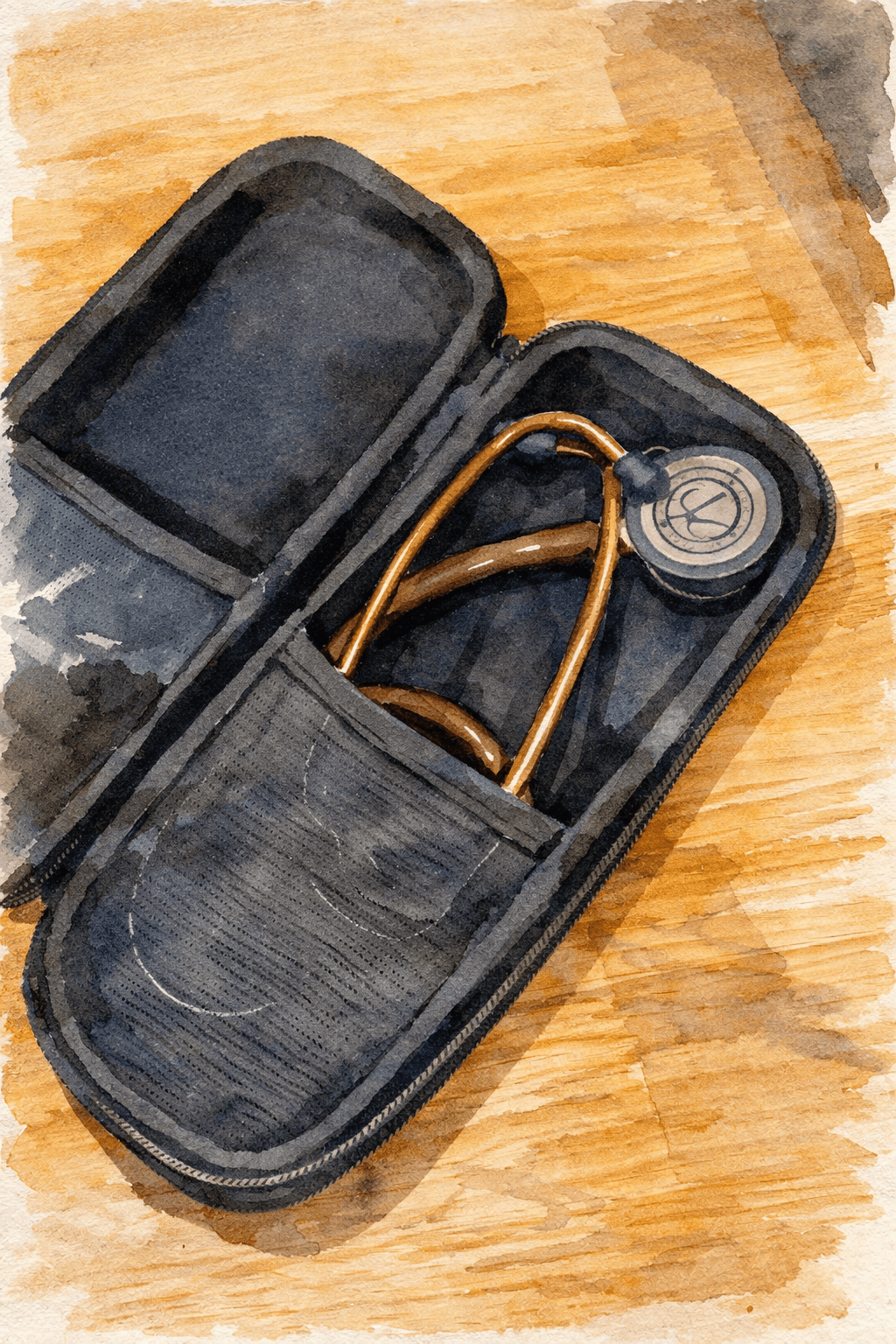
I’m a doctor.
Which means I spend most of my days with elderly patients, because let’s be honest, young people doesn’t always go to the doctor. Old people show up. With lists. And stories. And time.
I work in a practice with a lot of older patients. Wonderful people. Complex people. People with medication lists longer than most novellas. Some problems are physical, some psychiatric, some existential, and many begin with:
“Doctor, while I’m here…”
We are four doctors covering about 3,700 patients.
Yes. Four. Thousand.
Three general practitioners in permanent positions, one intern, and one of the GP is currently working part-time, which, as you might guess, means someone else quietly takes over the remaining patients. Let’s just say I work the equivalent of two and a half doctors.
Extra responsibility and an impressive caffeine tolerance.
Being a general practitioner is adorable in theory. In reality, you’re not just a doctor. You’re a caseworker for the Norwegian Labour and Welfare Administration, a therapist, a school consultant, a child welfare liaison, and a full-time administrator. The medical part? That’s squeezed in between forms.
So yes.
I do a lot.
And eventually, the lot did me.
Burnout didn’t arrive dramatically. No fainting. No tears in the supply room. Just a slow erosion. Life narrowed down to:
Work – home – being a mom – food – sleep – repeat.
Hobbies? Gone. Energy? Gone. Joy? On long-term sick leave.
People tell me I have “great capacity.”
Which is a lovely way of saying, “You can suffer longer before collapsing.”
The real red flag was when my brain quietly stopped doing its job properly. Patients with chest pain no longer triggered that internal alarm. You know, the this matters right now feeling. Instead, I felt… nothing. Or irritation. Especially irritation. I got snappy. Impatient. Particularly with the receptionist who decides which patients get booked.
That’s when I realized:
This isn’t just bad for me.
It’s bad for patients.
So I did the unthinkable.
I admitted it.
I told my department head. She already noticed. So did my colleagues, they were burnout themselves. And instead of the expected “just hang in there,” I got something almost radical: support. She gave me a week off. No fight. No guilt. Just, “You need this.”
And she was right.
Will a week fix everything? Probably not. Burnout doesn’t respect calendars. But for now, I refuse to think about work. I want a massage. I want to read something without learning objectives. I want to buy a Nintendo or PlayStation game and disappear into a world where problems can be solved by jumping on them.
Revolutionary self-care, I know.
This isn’t weakness.
It’s damage control.
Doctors are very good at ignoring themselves. We call it professionalism. But there’s a point where pushing through isn’t heroic, it’s dangerous.
I’m lucky. I have colleagues who understand that stepping back can be the most responsible decision you make.
So here’s my current treatment plan:
Rest. Distance. Low expectations. And possibly Witcher 3.
We’ll see what happens next.
For now, I’m choosing myself, before my burnout chooses for me..
 Faint Voice
Leave a comment